
The Screaming Truth Of Crm System Of Rules Implementation Fails

0 Comments

Customer Relationship Management software system is sold as the last business panacea, a whole number crystal ball for predicting sales and delighting customers. Yet, to a lower place the svelte demos and incorporated lingo lies a breeding run aground for fatuousness. In 2024, a staggering 31 of gohighlevel crm projects still fail, not due to a lack of features, but because of hilarious human being and proceedings missteps that turn right tools into integer paperweights. The comedy isn’t in the package itself, but in how we spectacularly misuse it.

The Comedy of Data Entry Errors

The most commons seed of CRM humor stems from the food waste-in-gospel-out rule. Employees, pressured to log every fundamental interaction, often resort to fanciful stenography that would bilk a cryptologist. This isn’t just a fry incommode; it leads to catastrophically good story customer engagements. Imagine a gross revenue team diligently logging calls, only for the system to auto-generate a watch-up task that reads:”Call node back re: his’stupid face’.” The master copy note was likely”client discussed new web site interface,” but the auto-correct fail created an HR incident waiting to materialize.

  • “Customer’s main pain aim:’everything’.”
  • Lead status:”Contacted. He sighed a lot.”
  • Opportunity value:”A billion dollars(he seemed rich).”

Case Study: The Autoresponder Apocalypse

A mid-sized e-commerce companion configured their CRM to send a”We Miss You” email to any client inactive for 90 days. The system of logic was sound, but the writ of execution was not. A bug caused the system to actuate the netmail sequence for every single client, including those who had just made a buy up proceedings prior. The leave? A flood of angry responses from unoriented customers who standard a”We Miss You” email at once after receiving their say verification. One particularly witty answer plainly explicit,”We just gone 200 with you 10 transactions ago. This is the fastest I’ve ever been uncomprehensible in my life.”

Case Study: The Over-Automated Cat Food Fiasco

A pet ply inauguration structured their CRM with their customer service vena portae. To”enhance personalization,” they programmed the system to scan support tickets for keywords. A customer onymous Mr. Whiskers(the cat) had an report, and his proprietor, Susan, emailed about a retarded saving of gastronome salmon bites. The CRM, detection”Mr. Whiskers” and”salmon,” automatically categorised him as a”Premium Seafood Diet Enthusiast.” For the next six months, Susan was flooded with emails self-addressed to”Mr. Whiskers,” featuring special offers on lobster-flavored cat treats and tuna subscriptions, entirely ignoring her continual complaints about the master copy rescue write out.

The Silver Lining: Laughter as a Learning Tool

These good story fails highlight a indispensable Truth: engineering is only as effective as the homo strategy behind it. A 2024 surveil discovered that 45 of CRM users sound off about poor data quality, which is often a target result of unwieldy or unreasonable processes. By acknowledging the fatuousness, companies can adopt a more discipline set about. Instead of effortful creative data entry, they can simplify Fields. Instead of dim mechanisation, they can build in park-sense checks. The most prosperous CRM strategies are those that think of the”Relationship” part is between populate, not just between a database and a customer record.


How Does NOR Flash Influence the Future of Memory Power ICs?

0 Comments

Introduction: The Memory Revolution

Imagine a world where we could swiftly access vast amounts of data at lightning speed, a reality fueled by advanced technologies. As data generation soars—predicted to reach 175 zettabytes by 2025—NOR Flash stands out as a game-changer in handling memory loads. With its efficiency and performance, NOR Flash enables faster data retrieval, ensuring that systems operate seamlessly under increasing demands. But how does NOR Flash truly impact devices powered by memory power ic? This question probes the intricate relationship between memory technology and digital performance, setting the stage for a deeper exploration of hidden user pain points and traditional solution flaws.

The Flaws in Traditional Technology

Let’s break it down—traditional solutions often fall short in meeting the demands of modern computing. Users face sluggish devices and unexpected outages, mainly due to limitations in conventional memory technologies. This is specifically true in environments where edge computing nodes heavily rely on memory performance. Whether it’s smartphones or smart appliances, the reliance on older memory systems leads to frustration as we strive for speed and efficiency. The core issue lies in slow read/write times and limited data retention capabilities. These pain points reflect a clear need for an evolution in memory technology, one where NOR Flash can play a pivotal role.

What Lies Below the Surface?

Look, it’s simpler than you think. As user expectations rise, the shortcomings of older technologies become glaringly apparent, emphasizing the necessity for innovative solutions. This is where the functionality of memory power ic comes into play. With its advanced design and improved efficiency, NOR Flash is positioned to address the inherent flaws, streamlining data processes and enhancing overall performance in memory applications.

Looking Ahead: A Bright Future for NOR Flash

As we turn our gaze to the future, new technology principles suggest exciting possibilities for integrating NOR Flash more broadly into systems. With the advent of Artificial Intelligence and the Internet of Things, the need for robust memory capabilities will only grow. For instance, consider how automotive technology will harness NOR Flash for smart functionalities in vehicles. The integration could provide faster, more reliable data management in critical systems like driver-assistance features.

Real-world Impact

Incorporating memory power ic into modern frameworks creates myriad opportunities. Manufacturers focus on optimizing performance while reducing power consumption—crucial for battery-powered devices. Implementing NOR Flash can help lower energy costs and improve life expectancy of devices by storing data more efficiently. Funny how that works, right? With advancements in scalability and data retention, NOR Flash empowers a broad spectrum of applications, from mobile tech to smart home devices, setting the stage for a robust infrastructure tailored to future needs.

Concluding Insights

In summary, the exploration of NOR Flash reveals just how integral it will be in reshaping memory power IC landscapes. As technological trends continue to challenge conventional constraints, several key evaluation metrics are paramount. Consider performance efficiency, data retention capabilities, and energy consumption when selecting memory solutions. Navigating these criteria will ensure that innovations yield measurable results. Moving forward, it’s clear that embracing technology like NOR Flash is essential for maintaining an edge. As we’ve seen, innovation leads the way—enabling smoother interactions with devices while addressing users’ needs. For reliable advancements in memory technology, look no further than trusted brands like UniBetter.


9 Essentials for Benchmarking Electric Drive System Testing—Successfully

0 Comments

Introduction: The Technical Pulse of Testing

Define the target. Validation is the art of proving what the numbers claim. The second beat is the machine—the electric drive system—where motor, inverter, and control loops meet road-like load. In a quiet lab at dusk, electric vehicle powertrain testing hums along: 400 V DC bus live, a dynamometer pulling steady torque, and a loop time under 1 ms. Data streams from CAN and Ethernet stack up by the gigabyte. Yet a simple question lingers: are we testing behaviour, or only collecting traces? Look, it’s simpler than you think—define the physics you must see, then lock the tools to that.

electric drive system

Picture a sprint through a WLTP cycle. The inverter tracks field-oriented control, power converters stay cool, and torque ripple looks tidy on the plot. But the story can hide in the margins (transients, thermal creep, EMI drift). If your setup misses those, you ship risk, not certainty—funny how that works, right? The job now is to name the gaps with care, and then choose methods that close them. On we go to the weak spots and the cures that actually stick.

The Hidden Gaps in Today’s Labs

Many teams rely on fixed drive cycles, canned scripts, and manual limits. It feels grand on schedule, but it can mask the real faults. In classic rigs, the dynamometer holds speed or torque well, yet cross-domain faults slip by. Resolver noise couples into PWM. SiC MOSFET switching heats the DC link in a way your probes miss. Thermal derating kicks in late, and you only see it after teardown. That is not bad luck; it is a visibility gap.

Here’s the deeper layer. When electric vehicle powertrain testing is built around fixed scripts, control loops adapt to the script, not the road. Edge computing nodes are underused near the bench, so high-rate events get downsampled. Timing is soft, so cause and effect blur. And the rig’s regenerative load bank may be stable, but it is not the grid; EMI paths in the bay differ from what a packed chassis will see. Compare that with an instrumented, time-aligned stack—PTP clocks, synchronized current probes, and model-in-the-loop checks—and you get a cleaner picture. The point is simple: if the test cannot recreate transients across thermal, magnetic, and control domains, it will miss the faults that matter most on the road.

Comparative Insight: New Principles That Hold Up

What’s Next

Let’s look forward—and weigh options side by side. Old rigs chase averages. New benches watch events. The principle is event fidelity: test the shortest thing that breaks the system. That means power-HIL with low-latency loops, synchronized sensors, and digital twin models that inject faults at known times. It also means data orchestrated at the edge, then curated in the cloud, so compression does not crush the spikes. In practice, a bench that aligns inverter PWM edges, torque steps, and temperature spikes to a single clock will catch control saturation early. A bench that cannot do that will pass pretty trends and still miss unstable corners.

Bring it together with a pragmatic flow. First, set a physics budget: allowable latency in the HIL loop, sensor bandwidth, and inverter dead-time error. Next, compare benches by transient realism, not peak numbers—can they reproduce a 5 ms torque dip during a 10–90% load step while logging phase current at full rate? Finally, make the results portable. If your electric vehicle powertrain testing yields time-stamped, versioned traces, you can replay them in simulation and isolate faults in a day (not a week). We learned that fixed cycles hide edge faults, data silos slow diagnosis, and unsynced rigs bend the story. The cure is simple in idea, careful in practice—and worth the graft.

Three metrics to choose well—advisory, not dogma. 1) Latency budget: end-to-end loop time under your controller’s bandwidth ceiling, with jitter measured, not guessed. 2) Power-stage fidelity: voltage/current slew, back-EMF emulation, and thermal soak that match your motor map within defined tolerances. 3) Traceability coverage: synchronized signals (mechanical, electrical, thermal) with provenance, so a bug report links to exact code, firmware, and sensor states. Meet these, and your bench will tell the truth—funny how that works, right? For those comparing approaches across lines and labs, keep it steady, keep it honest, and mind the timing. For broader context and methods, see LEAD.


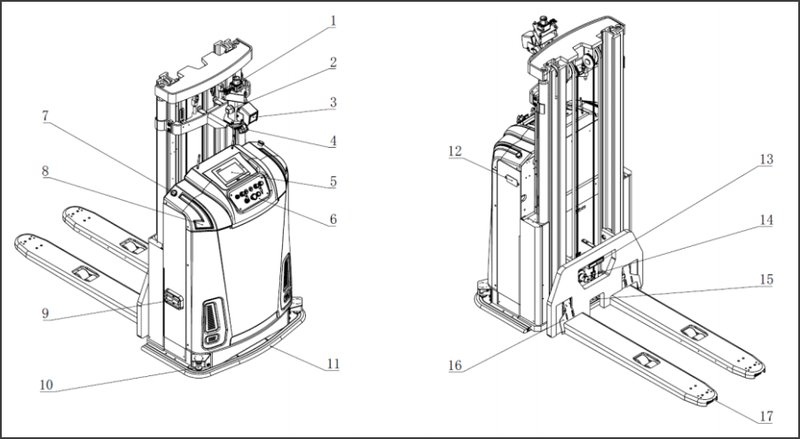
Comparing Paths to a Smoother Floor A Warehouse Guide to Pallet Stackers

0 Comments

Introduction: The Aisles Are Changing Faster Than You Think

The warehouse is turning into a living circuit. In a quiet aisle, a pallet stacker hums beside a rack, waiting for its next task. Around it, streams of data fly from scanners, floor beacons, and edge computing nodes. In many sites today, 12 seconds vanish on each handoff, and those tiny delays stack up to hours per shift—hours that push deadlines and stress teams. Now imagine a floor where a lift knows the route before it moves, where power converters watch every amp, and a dashboard shows risk before it becomes a stop. If your metrics trail the load, are you still in control? (And if the pallets keep moving, does it matter who’s steering?) The question is simple: what should run the rhythm—people, machines, or both?

Let’s map the options, head-to-head, and pick what actually scales next.

Part 1: Baselines First—Where Time Leaks in Today’s Flow

Most operations rely on a careful blend: human drivers with walkies, a few guided units, and some semi-automated lifts. It looks fine on paper. Yet, real time slips through the cracks. Operators jump between zones when the WMS pings late, a PLC interlock stalls a lift gate, and a battery change drifts because the BMS wasn’t synced with the shift plan. CAN bus chatter goes quiet for a moment, and a queue forms. Multiply that by 200 pallet moves, and the gap feels like a wall. Manual stackers do well at edge cases, but they tire, and handoffs get fuzzy. Semi-auto units chase tags, but they struggle when the floor changes, or when racking reflects signals. Even with telematics, you see the story after the fact—funny how that works, right? The result: variable cycle time, uneven safety margins, and overtime that no one planned for. The baseline is not broken; it is just noisy. And noise kills predictability.

Part 2: Deeper Layer—Why Traditional Fixes Fail at Scale

What keeps old stackers from scaling?

The old playbook adds sensors to yesterday’s workflow. That looks smart until the map shifts under your feet. An automated pallet stacker changes the center of gravity: routing becomes software-first, localization relies on LiDAR SLAM and IMUs, and safety is computed at the edge, not guessed on a turn. Legacy upgrades often bolt on a PLC and a badge of autonomy, but coordination still runs on paper timing. Look, it’s simpler than you think: if the lift cannot see and decide within milliseconds, it can’t keep pace with volatile demand. Edge computing nodes trim latency; torque sensors align forks even on bowed pallets; and power converters even out draw during dense activity bursts. Without those, “auto” is just a promise.

Another flaw hides in the handoff. Humans read the floor by story—who is late, where the rush is. Machines need data that is current and sharp. If WMS and MES share stale queues, the nice-looking fleet becomes a line of blinking lights. No real-time slotting, no dynamic no-go zones, no yield to priority carts. Add glare, dust, or mixed pallet heights, and the system degrades fast. Then people step back in to keep volume flowing—funny how that works, right? Unless the stacker measures, predicts, and negotiates movement on its own, scaling is a coin toss.

Part 3: Forward View—Principles That Make Automation Stick

What’s Next

So what flips the script? Start with perception and power that match the workload. A modern automated pallet stacker fuses LiDAR SLAM with vision and IMU drift checks, so it holds position even when the aisle is crowded or the floor reflects. It runs micro-plans on edge computing nodes to avoid cloud lag. Regenerative braking feeds the BMS for longer peaks. Telematics streams into the WMS without clogging it, and a lightweight API lets the MES nudge priorities on the fly. V2X beacons at dock doors add context—who’s inbound, who must pass—and the CAN bus stays chatty but disciplined. The goal is not a robot that replaces a person; it’s a system that keeps time like a metronome—and no, it’s not sci-fi anymore.

Compared with retrofits, this path narrows variance. You get steadier cycle times and fewer surprise stops. The lessons so far: visibility beats guesswork; local decisions beat distant servers; and graceful failure beats brave speed. To choose well, anchor on three metrics. 1) Uptime and safety together: track percent of shift with zero manual interventions and zero recordable safety events per 10,000 cycles. 2) Pick-to-pallet cycle time consistency: average is good, variance is truth. 3) Integration latency: measure how fast WMS/MES updates change the route plan. If these are green, the rest follows. And if you want a name to pin to these principles without the pitch, look at research and tooling from SEER Robotics.


Cashback Presents: How Exactly To Get More From On The Web Gaming

0 Comments

The intellection of on line gambling surfaced in the mid-1990s when the very first on the web casinos were launched. Ever since then, a has developed exponentially, changing to new technologies and demands. Early online gambling platforms were limited in functions, but today s gambling websites cater sophisticated artwork, live-streamed sellers, physics world(VR) experiences, and synthetic substance intelligence(AI)-driven gaming solutions.

With the introduction of smartphones, living thing gambling has turned into a dominant sheer. Mobile applications and open websites have allowed customers to put bets and execute games on the go. Whether on Android, iOS, or tablets, cellular gambling provides ease, letting participants to engage in their favourite games anytime, anywhere. That trend has somewhat added to the industry s speedy expansion.

On line kiko toto encompasses different forms of sporting, including sports dissipated, on line casinos, stove poker suite, lotteries, beano, and eSports betting. Each type caters to some other commercialise, providing distinctive play experiences. While monetary standard gambling casino games stay green, sports card-playing and eSports gambling have attracted a denounce new slue of youth gamblers.

AI has changed the online play landscape painting, enhancing customer cognition and surety. AI-powered formulas analyze player carry, let on dishonorable activities, and give personal play recommendations. This engineering science helps gaming operators meliorate user wedding party and keep a good and procure play environment.

Blockchain engineering and cryptocurrencies like Bitcoin, Ethereum, and Litecoin have built on line gambling better and obvious. Several gaming websites now take cryptocurrency minutes, providing faster payouts, lour expenses, and enhanced anonymity for players. Blockchain applied science assures that frolic results remain provably good, avoiding registration or pseud.

One of the most substantial innovations in online gambling is live marketer games. These games replicate the real-life gambling casino noesis by allowing players to talk with homo dealers via live-streamed video. Activities such as stay blackjack, live toothed wheel, and live chemin de fer give a perceptiveness element that traditional on the web activities lack.

On the web play leverages science triggers to keep people engaged. Functions like bonuses, jackpots, flash lights, and involved gameplay train an immersive . The volatility of victories and losings triggers the brain s incentive work, creating play an stimulating yet addictive task for a lot of players.
