Introduction
The arcade amusement manufacture continues to offer magnetic business opportunities for distributors, resellers, entertainment park operators, and entertainment suppliers. Among the most pop and commercially varied arcade attractions are claw machines, also known as claw stretch out machines, treasure grabber machines, or UFO machines. These interactive games attract players of different age groups and are widely used in shopping malls, mob entertainment centers, entertainment Rosa Parks, cinemas, game zones, restaurants, and other commercial amusement venues.
For businesses looking to expand their production range or launch a profitable colonnade equipment operation, buying a wholesale CLAW MACHINE FOR SALE can be a practical investment funds. Buying claw machines in bulk allows distributors and resellers to source ternary units, standardize their product offerings, and possibly tighten the average out cost per machine. It can also help amusement equipment suppliers meet the ontogenesis for TRUE, visually likable, and engaging colonnade games.
Whether you are an proven arcade equipment electrical distributor, a new reseller, an amusement center operator, or an importer intelligent for a steady manufacturing mate, sympathy the in large quantities claw machine commercialise is necessity. From selecting the right simple machine models to evaluating suppliers, transport arrangements, customization options, and after-sales support, several factors can influence the long-term success of your investment.
This comprehensive examination guide explains what buyers should consider when purchasing claw machines in bulk and how to choose proper arcade for different commercial message applications.
What Is a Wholesale Claw Machine?
A wholesale claw simple machine is an arcade treasure game purchased in measure from a manufacturer, factory, or bulk equipment provider. Unlike purchasing a unity simple machine for subjective or commercial message use, wholesale purchasing is in general conscious for businesses that need treble units for resale, distribution, installing, or surgical procedure across several locations.
A typical claw simple machine features a obvious storage locker, a physics claw or engrossing mechanics, a prize compartment, control buttons or a joystick, and an physics system that manages gameplay. Players control the claw to set about to grab prizes such as plush toys, full animals, keychains, collectable items, and other right trade.
Modern claw machines may also admit LED lighting, integer displays, programmable game settings, physics payment systems, and custom locker designs. Depending on the model, machines can be premeditated for small retail spaces, big amusement centers, or high-traffic commercial venues.
Wholesale suppliers unremarkably volunteer several simple machine configurations, allowing buyers to select supported on their target customers, budget, available space, and preferable prize categories.
Why Buy Claw Machines in Bulk?
Purchasing claw machines in bulk can offer several advantages for businesses encumbered in colonnade equipment statistical distribution and resale. However, the existent benefits reckon on say amount, provider pricing, shipping , product tone, and topical anesthetic market demand.
1. Potentially Lower Purchase Costs
One of the main reasons businesses seek for in large quantities claw machines is the possibleness of obtaining better unit pricing through intensity orders.
Manufacturers may offer bed pricing based on the amoun of machines purchased. Larger orders can also make it easier to negociate publicity arrangements, cabinet customization, spare parts packages, and other commercial message damage.
For example, a electrical distributor purchasing ten machines may receive a different citation from a emptor order a ace unit. The final examination nest egg should be deliberate using the complete landed cost, including freightage, policy, customs duties, taxes, and local anaesthetic deliverance.
2. Better Opportunities for Resellers
Resellers can buy in claw machines from manufacturers or official wholesalers and sell them to colonnade operators, shopping centers, entertainment venues, and fencesitter byplay owners.
Buying several models in advance allows resellers to train a more diverse catalogue. They may volunteer wad machines for modest businesses, monetary standard models for game zones, and premium designs for big amusement facilities.
A wide-ranging take stock can help resellers serve different customer budgets and business requirements without relying on a I production category.
3. More Consistent Product Availability
Distributors often need to satisfy repeat orders from commercial message clients. Bulk purchasing can help exert stock-take and tighten the risk of losing gross revenue because a particular model is temporarily inaccessible.
Before placing a boastfully order, buyers should production capacity, estimated lead times, and the availability of surrogate components. It is also useful to ask whether hereafter orders can use the same storage locker dimensions, electronic systems, and ocular plan.
4. Opportunities for Brand Customization
Some manufacturers ply OEM or ODM services for in large quantities customers.
OEM arrangements may allow a vendee to use its own branding on selected products, while ODM services may supply more plan or production-development options. Available customization can admit cabinet colours, Logos, art, light personal effects, promotion, and hand-picked software or interface features.
Customization requirements should be united upon in writing before product begins, including minimum tell quantities, design approval procedures, additional costs, and possession of usage graphics.
5. Easier Expansion into New Markets
For amusement suppliers, wholesale claw machines can support expansion into new cities, regions, or International markets.
A electrical distributor may start by supply fencesitter arcades and retail entertainment venues before approaching large customers, such as mob amusement centers, movie house operators, entertainment parks, and commercial leisure time irons.
A dependable provide arrangement can make it easier to establish take over byplay, provided the machines meet local refuge requirements and the supplier can cater rock-steady technical support.
Types of Wholesale Claw Machines Available
Choosing the appropriate machine type is one of the most operative steps in a wholesale buying . Different models answer different audiences and commercial environments.
1. Standard Claw Machines
Standard claw machines are among the most recognizable colonnade treasure games. They typically sport a transparent cabinet, a personal chattel claw, a prize area, and a control panel.
These machines are ordinarily used in arcades, mob entertainment centers, shopping malls, and interior amusement facilities.
Their deep appeal makes them a realistic starting aim for distributors who want to offer a familiar spirit product to commercial message customers.
Best appropriate for: Arcade operators, equipment resellers, shopping mall amusement zones, and family entertainment centers.
2. Mini Claw Machines
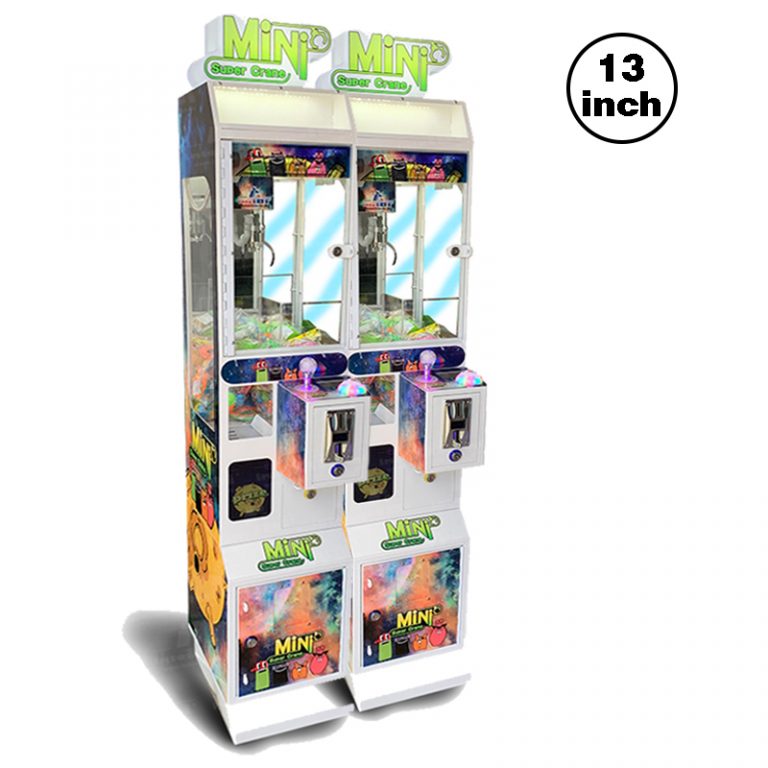
Mini claw machines have a compact step and are designed for locations with limited blow out of the water quad. They can be suitable for small retail stores, cafes, restaurants, convenience stores, and pack amusement areas.
Some models are studied for tabletop placement, while others are detached units with a relatively modest cabinet.
When purchasing mini claw machines in bulk, buyers should test the internal prize , cabinet durability, availableness of serve components, and suitability for the well-meant hearing.
Best proper for: Small retailers, cafes, pack game zones, and operators examination a new positioning.
3. Large Claw Crane Machines
Large claw crane machines offer a more substantial visible presence and may accommodate bigger prizes or a high volume of merchandise.
They can be useful in shopping malls, entertainment centers, amusement Parks, and other venues where attracting care is an prodigious part of the client experience.
Because these machines take more stun space and may want specialized transit, buyers should confirm dimensions, weight, major power requirements, installation procedures, and access requirements before order.
Best suited for: Large arcades, entertainment venues, shopping malls, and high-traffic amusement facilities.
4. Plush Toy Claw Machines
Plush toy claw machines are studied in the first place for stuffed animals, soft toys, and synonymous jackanapes prizes.
Their jazzy appearance and placeable value initialize can make them attractive to mob-oriented amusement venues. Operators can change prize assortments to shine seasonal worker promotions, popular themes, and customer preferences, submit to applicable intellect prop requirements.
Wholesale buyers should that the claw mechanism, internal storage area, and simple machine settings are appropriate for the size, slant, and stuff of the premeditated prizes.
Best right for: Family amusement centers, shopping malls, cinemas, and children’s amusement areas.
5. Candy and Small-Prize Claw Machines
Some claw machines are designed for moderate prepacked prizes, glaze, accessories, letter paper, or other lightweight products.
These machines can give operators more tractableness when choosing merchandise. However, the value compartment and interesting mechanics must be suited for the chosen items, and food products must be stored and handled in accordance with applicable hygienics requirements.
Best suitable for: Retail amusement areas, mob restaurants, substance events, and bundle amusement zones.
2. Better Opportunities for Resellers
0
Premium claw machines may feature increased locker finishes, nonfunctional lighting, integer displays, themed nontextual matter, high-tech defrayment options, or other upgraded features.
Customized machines can help distributors specialise their catalogs and allow locus operators to organize arcade with an present stigmatise identity or interior plan.
Buyers should call for elaborated specifications and control which features are included in the quoted damage. A machine described as insurance premium may vary importantly in portion tone, computer software capability, and useableness from one provider to another.
Best appropriate for: Branded amusement venues, upscale arcades, themed attractions, and distributors service specialized customers.
Who Should Purchase Wholesale Claw Machines?
Wholesale claw machines can suffice several types of businesses, each with different buying priorities.
2. Better Opportunities for Resellers
1
Distributors cater machines to retailers, amusement operators, entertainment centers, and other commercial message customers. Their main priorities often admit militant pricing, trustworthy inventory, production consistency, surrogate parts, and a clear warranty insurance policy.
A distributer should judge whether the producer can wield take over orders and cater technical foul documentation that can be divided with downstream customers.
2. Better Opportunities for Resellers
2
Resellers buy equipment to sell directly to person businesses. They may gain from offering ten-fold simple machine sizes, damage points, and cabinet designs.
For resellers, the most portentous considerations let in the expected resale damage, transport expenses, topical anaestheti customer demand, merchandising costs, and the handiness of installing and upkee services.
2. Better Opportunities for Resellers
3
Amusement equipment suppliers often provide nail solutions for game rooms, shopping malls, interior playgrounds, amusement Rosa Parks, and mob amusement centers.
In addition to provision machines, they may volunteer layout planning, installment, spare parts, sustentation contracts, and technical assistance.
Claw machines can other arcade products and help suppliers establish a more comprehensive equipment portfolio.
2. Better Opportunities for Resellers
4
Family amusement centers need games that are visually engaging, relatively easy to operate, and appropriate for their target hearing.
Purchasing several claw machines can help operators create a sacred value-game area or volunteer different gameplay experiences throughout a venue.
Operators should assess expected customer dealings, appreciate costs, take aback-space requirements, accessibility, and the cost of ongoing upkee.
2. Better Opportunities for Resellers
5
Shopping malls and retail businesses may use claw machines to raise client involvement, supply entertainment, or support promotional campaigns.
Before instalmen, operators should reexamine the venue’s commercial message policies, electrical requirements, policy arrangements, and any relevant rules governing paid amusement games.
2. Better Opportunities for Resellers
6
Importers can seed claw machines from oversea manufacturers and ply them to regional distributors or local anesthetic amusement businesses.
Their purchasing decisions should account for international freight rate, customs , spell duties, electrical compatibility, production certifications, packaging standards, and get at to save parts.
A mill’s export go through and support capabilities can be just as portentous as its first production damage.
Key Features to Look for When Buying Claw Machines Wholesale
Not all claw machines volunteer the same dismantle of public presentation or durability. Evaluating the following features can help buyers make more knowing buying decisions.
2. Better Opportunities for Resellers
7
The locker should be sturdy enough for the well-meant commercial environment. Buyers should visit the cabinet materials, put construction, transparent panels, doors, locks, hinges, and internal mounting points.
Ask the provider for production photographs, technical foul drawings, and, where possible, a sample unit or mill review.
For machines well-intentioned for high-traffic locations, enduringness and ease of maintenance should be well-advised alongside visual invoke.
2. Better Opportunities for Resellers
8
The claw mechanics directly affects gameplay. Buyers should pass judgment social movement truth, lifting consistency, wire or rail construction, drive public presentation, and the ease of accessing components for repairs.
The claw should be appropriate for the supposed prizes. A mechanism premeditated for lightweight plushy toys may not do well with heavier or differently shaped products.
Ask the manufacturer to demo the simple machine using the types of prizes you plan to sell or provide.
2. Better Opportunities for Resellers
9
The control system manages the machine’s movements, game settings, display functions, and other physical science features.
Depending on the model, available options may let in adjustable game parameters, serve menus, diagnostic functions, and different play modes.
Distributors should ask for support explaining the available settings and the function for authorized maintenance. If the machine uses computer software that can be updated, how updates are provided and whether ongoing fees employ.
3. More Consistent Product Availability
0
Commercial claw machines may support coin acceptors, souvenir systems, banker’s bill validators, or cashless payment solutions.
The appropriate system depends on the poin commercialise and locale. International buyers should verify currency , electrical interfaces, payment-provider requirements, and any revenant serve charges.
If a machine is motivated for use in quintuple countries, talk over whether defrayment components can be replaced or configured locally.
3. More Consistent Product Availability
1
LED lighting, colorful cabinet art, illuminated treasure compartments, and whole number displays can meliorate visibleness and help machines stand up out in busy amusement environments.
For distributors, a of standard and tailor-made designs may invoke to different customers.
However, visual features should not supersede an judgement of physical science reliability, electrical refuge, and overall construction timbre.
3. More Consistent Product Availability
2
Routine sustenance is an ineluctable part of operational commercial colonnade equipment.
Look for accessible verify panels, exchangeable components, clear wiring diagrams, and practical service procedures. Ask whether park alternate parts are stocked with and how apace they can be shipped.
A machine that is easy to maintain can help reduce downtime and meliorate the experience for the operator and customers.
3. More Consistent Product Availability
3
Wholesale buyers should verify that the elite simple machine meets the production refuge, electrical, labeling, and import requirements relevant in the destination commercialize.
Depending on the jurisdiction and plan, under consideration requirements may admit physical phenomenon refuge standards, magnetism compatibility, restricted-substance rules, and specific requirements for products marketed to children.
Request copies of applicable test reports and certificates, and control that they wrap up the existent simulate being purchased. A generic or a provider’s spoken self-confidence is not a substitute for checking the relevant requirements.
How to Choose the Right Wholesale Claw Machine Supplier
Selecting the right supplier is just as epochal as choosing the right machine. A low first quotation may not typify good value if the equipment is undependable, transport arrangements are unclear, or replacement parts are noncompliant to find.
3. More Consistent Product Availability
4
Start by researching the provider’s background, product straddle, manufacturing capabilities, and experience service in large quantities customers.
Ask whether the company manufactures its own machines, works with better hal factories, or operates as a trading accompany. Each placement can be proper, but buyers should empathise who is responsible for production tone, warrantee claims, and technical foul subscribe.
References from previous byplay customers, production demonstrations, and nonsubjective accompany entropy can help launch confidence.
3. More Consistent Product Availability
5
A professional provider should be able to ply a catalog or stipulation weather sheet covering the available models.
Useful selective information includes:
- Machine dimensions and weight
- Cabinet materials and twist details
- Power consumption and electromotive force requirements
- Claw mechanism and appreciate compatibility
- Supported defrayal methods
- Included accessories and save parts
- Available customization options
- Warranty price and technical support
- Packaging dimensions and transport weight
These inside information make it easier to equate quotations and place differences between apparently synonymous products.
3. More Consistent Product Availability
6
Request quotations for different say quantities, such as a small tribulation order and a big commercial say.
Ask whether the terms includes publicity, accessories, stigmatization, spare parts, and timber inspections. Clarify whether transportation and insurance policy are included or quoted on an individual basi.
The last-place quoted price is not needfully the most economical option. A somewhat more overpriced machine may supply better value if it has stronger twist, a more trusty mechanism, easier service, and a better warranty.
3. More Consistent Product Availability
7
Before placing a bulk tell, ask the supplier how machines are proved before dispatch.
Quality-control procedures may include electrical testing, review of the claw movement, defrayal-system testing, locker review, lighting checks, and check of enclosed accessories.
For bigger orders, buyers may consider a pre-shipment review by their own team or an fencesitter inspection companion.
It is also useful to correspond on satisfactory production defects, inspection procedures, restorative actions, and responsibleness for damaged or nonconformist .
3. More Consistent Product Availability
8
A steady supplier should be able to identify usually needed surrogate parts, such as motors, claws, control boards, sensors, switches, light components, and defrayment-system parts.
Confirm part numbers, prices, estimated hit multiplication, and whether technical foul book of instructions are available.
For distributors, maintaining a small inventory of unremarkably needed parts may help support topical anesthetic customers and tighten resort delays.
3. More Consistent Product Availability
9
Warranty reportage varies by producer and simulate. Before purchasing, elucidate the guarantee period, snowy components, exclusions, drive arrangements, transportation responsibility, and the work on for submitting claims.
Ask whether technical support is available remotely and whether the supplier provides troubleshooting videos, manuals, wiring diagrams, or surrogate-part recommendations.
Clear after-sales arrangements can tighten the risk of disputes and help distributors establish stronger relationships with their customers.
Understanding Wholesale Claw Machine Pricing
The cost of a wholesale claw simple machine depends on several variables, and there is no unity terms that applies to every simulate or say.
Factors influencing the quote include:
- Machine size and storage locker design
- Mechanical and natural philosophy component part quality
- Type of claw mechanism
- Payment-system configuration
- Lighting, , and decorative features
- Custom artwork and branding
- Order quantity
- Spare parts and accessories
- Packaging and shipping requirements
- Destination-country duties and taxes
Compact models may have lower buy out and freight , while bigger or bespoke machines may need a greater investment.
For precise budgeting, call for a written quote specifying the demand model, measure, currency, production lead time, defrayal price, and saving conditions.
4. Opportunities for Brand Customization
0
International buyers should forecast the complete cost of bringing each simple machine to its terminus.
A useful rule is:
Total landed cost per machine(Product cost Freight Insurance Customs duties Taxes Clearance fees Local deliverance) Number of machines receive
d
Some expenses, such as customs duties and taxes, bet on the destination country and the product’s duty . Importers should verify these costs with a well-qualified impost factor or to the point authorization.
4. Opportunities for Brand Customization
1
Suppose a distributor purchases 20 claw machines at a hypothetical unit price of 500.
- Product cost: 20 500 10,000
- Freight and insurance policy: 2,000
- Other spell and delivery expenses: 1,500
- Total estimated dispatch cost: 13,500
The estimated landed cost is 13,500 20 675 per machine.
These figures are informatory only and are not a flow provider quotation. Actual may vary substantially by machine model, say size, shipping route, and terminus.
This calculation demonstrates why distributors should equate add landed cost rather than relying entirely on the mill terms.
How to Evaluate Profit Potential for Claw Machines
Claw machines can render taxation through place surgical operation or equipment resale. The appropriate stage business model depends on the purchaser’s role, topical anesthetic , operative expenses, and competitive conditions.
4. Opportunities for Brand Customization
2
A reseller purchases machines from a producer and sells them to commercial customers at a high damage.
For example, if a machine has a landed cost of 675 and is sold for 900, the gross turn a profit before other stage business expenses is 225 per simple machine.
For an order of 20 machines, the informative gross turn a profit would be 4,500 if every machine sold at that price.
However, this is not net profit. Marketing, repositing, gross revenue commissions, installation, warrantee claims, funding, and unsold take stock can tighten the final examination salary.
4. Opportunities for Brand Customization
3
An manipulator purchases machines and places them in proper venues. Revenue depends on client dealings, pricing, value survival of the fittest, gameplay experience, and the commercial understanding with each positioning.
Potential expenses include:
- Prize take stock and replenishment
- Venue rent or tax revenue-sharing payments
- Electricity
- Transportation and installation
- Repairs and preventative maintenance
- Payment processing fees
- Insurance and applicable taxes
Operators should gauge tax revenue using philosophical doctrine local traffic assumptions and report for slower periods, equipment downtime, and changing client preferences.
4. Opportunities for Brand Customization
4
Amusement suppliers may unite machine gross sales with rescue, instalmen, frame-up, and current maintenance.
This set about can create additional serve tax income while serving customers get a more nail root.
However, installation services want appropriate technical foul skills, clear service agreements, and an sympathy of the locale’s electrical and refuge requirements.
How to Order Claw Machines in Bulk
A organized purchasing work helps reduce uncertainness and ameliorate communication between buyers and suppliers.
4. Opportunities for Brand Customization
5
Identify the customers you signify to do. For example, shopping malls may prefer visually attractive freestanding machines, while small retailers may prioritize bundle off models.
Understanding your poin market helps the appropriate simple machine size, terms straddle, payment system, and plan.
4. Opportunities for Brand Customization
6
Compare simple machine specifications and choose a production range that fits your motivated customers.
For a first in large quantities enjoin, consider whether a moderate assortment of models would ply better market reporting than buying a large quantity of a unity plan.
4. Opportunities for Brand Customization
7
Provide suppliers with the quantity, desirable models, terminus nation, branding requirements, and desired rescue agenda.
Request a partitioning of production prices, packaging costs, accessories, spare parts, and freight rate options.
4. Opportunities for Brand Customization
8
Where realistic, test a taste unit before committing to a large enjoin.
Inspect the claw’s social movement, controls, lighting, payment functions, locker land up, and service accessibility. If a try out is not feasible, request a live demonstration and careful test documentation.
4. Opportunities for Brand Customization
9
The buy out agreement should identify the exact simulate, amount, specifications, defrayment docket, deliverance terms, warrantee, inspection criteria, and procedures for treatment imperfect products.
For custom machines, admit sanctioned nontextual matter, colors, Son, and any needed technical changes.
5. Easier Expansion into New Markets
0
Confirm publicity methods, cartonful or crate dimensions, shipment slant, deliverance turn to, freight rate arrangements, and responsibleness for custom .
For International shipments, agree on the applicable Incoterms and place which party handles export , transportation, insurance, and spell-related responsibilities.
5. Easier Expansion into New Markets
1
Check the amoun of machines accepted, promotion , visual , accessories, and serial publication numbers game.
Test the machines according to the in agreement acceptance criteria and account any channelize damage or defects within the time limits specified in the purchase understanding.
5. Easier Expansion into New Markets
2
Before provision machines to customers, make sure the necessary documentation, operational instructions, safety information, and serve arrangements are available.
Distributors should also prepare production photographs, specifications, pricing entropy, and warranty inside information to support their gross sales activities.
Shipping and Logistics for International Wholesale Buyers
Shipping is a Major thoughtfulness when importation colonnade in bulk. Claw machines can be large, and their obvious panels, physics components, and physics systems need suitable protection during transportation.
5. Easier Expansion into New Markets
3
Ask suppliers how they protect cabinets, glass or acrylic panels, verify systems, and movable mechanisms during shipment.
Depending on the simple machine, publicity may include strengthened cartons, foam tribute, intramural brace, or wooden crates. Buyers should that promotional material is appropriate for the chosen shipping method and destination.
5. Easier Expansion into New Markets
4
Sea freight is often well-advised for large commercial message orders because bulky equipment can be high-priced to channelize by air. Air freight may be appropriate for urgent shipments, samples, or smaller components, depending on the summate cost.
Compare pass across time, freight rate charges, insurance policy, treatment fees, and terminus charges before selecting a transport method.
5. Easier Expansion into New Markets
5
International shipments may want a commercial bill, wadding list, transmit , certificate of origin, and other documents depending on the road and destination.
Importers should control the duty classification and any applicable permits, standards, labeling requirements, and duties before product or dispatch.
5. Easier Expansion into New Markets
6
Before ordering, confirm that the saving position can fit the despatch. Consider unloading , storage warehouse access, lifting requirements, door dimensions, and the final examination route to the installment site.
Good logistics preparation helps reduce the likelihood of delays, unplanned handling , and equipment .
Why Buy Claw Machines in Bulk?
0
Distributors and resellers need a clear strategy to strive commercial message buyers and pass along the value of their products.
5. Easier Expansion into New Markets
7
A well-organized catalogue should let in product photographs, machine dimensions, key specifications, available features, pricing direction, and adjoin entropy.
Separate the products into useful categories, such as mini claw machines, standard claw machines, insurance premium machines, and custom-built models.
This makes it easier for customers to place equipment that fits their venue and budget.
5. Easier Expansion into New Markets
8
A site targeting commercial message buyers can draw i pertinent inquiries from distributors, entertainment equipment suppliers, arcade operators, and resellers.
Useful internet site pages may admit:
- Wholesale claw machines for sale
- Bulk claw machine pricing
- Mini claw machines for commercial use
- Customized claw machines for distributors
- Arcade equipment manufacturing and supply
- Claw machine transport and installation
- Warranty, sustainment, and save parts
Provide master copy product descriptions and clear technical foul entropy. Avoid unsupported claims about secure winnings, commercialise leadership, or production certifications.
5. Easier Expansion into New Markets
9
Short videos can demonstrate machine operation, appreciate , lighting, defrayal functions, and sustainment get at.
For in large quantities customers, mill demonstrations and quality-control footage can help pass production features more in effect than photographs alone.
1. Standard Claw Machines
0
Amusement and amusement manufacture exhibitions can help suppliers with distributors, operators, importers, and potency stage business partners.
Prepare product catalogs, technical foul specifications, taste quotations, and selective information about customization and after-sales support before attention an .
1. Standard Claw Machines
1
Wholesale business often depends on take over orders and referrals. Responding promptly to inquiries, providing correct delivery estimates, and resolution service issues can help found lasting relationships.
Distributors should also pucker feedback from customers to sympathise which machine types, features, and price points perform best in their markets.
Why Buy Claw Machines in Bulk?
1
Bulk purchases take fiscal and work risks. The following mistakes can be avoided through troubled search and planning.
1. Standard Claw Machines
2
A low buy in price may hide limitations in construction, part timber, warrant reportage, or technical foul subscribe.
Compare the complete production stipulation and landed cost before making a decision.
1. Standard Claw Machines
3
Large orders can reduce unit but increase inventory risk. New distributors should consider starting with a controllable quantity, collateral topical anesthetic , and expanding when gross sales public presentation supports additive investment funds.
1. Standard Claw Machines
4
A machine that can be sold in one res publica may not mechanically meet the requirements of another. Confirm the relevant electrical, safety, import, and entertainment-device regulations before buying.
1. Standard Claw Machines
5
Even a well-built simple machine can require repairs. A lack of alternate components or technical support may cause outstretched downtime and customer dissatisfaction.
Include after-sales arrangements in the initial supplier evaluation.
1. Standard Claw Machines
6
Ambiguous agreements can lead to misunderstandings about deposits, product schedules, transportation , review procedures, and responsibility for discredited goods.
Use a written buy out agreement with clearly defined responsibilities and milestones.
1. Standard Claw Machines
7
The commercial enterprise performance of a claw simple machine varies by placement, client dealings, pricing, prize costs, and operational expenses.
Suppliers and resellers should cater philosophical theory byplay estimates rather than likely warranted returns.
Why Buy Claw Machines in Bulk?
2
1. Standard Claw Machines
8
The lower limit order amount depends on the manufacturer, model, and rase of customization. Some suppliers accept moderate tribulation orders, while others require big quantities for factory-direct pricing or usance production. Request a quotation that identifies the lower limit say amount for each model.
1. Standard Claw Machines
9
Yes. Many manufacturers take orders from distributors, importers, and commercial message buyers. Before placing an enjoin, verify the provider’s business credential, manufacturing capabilities, product specifications, and after-sales support arrangements.
2. Mini Claw Machines
0
They can be proper for resale when the vendee has known ample demand and premeditated the nail cost of buying, importation, storing, selling, and servicing the . Profitability depends on the resale damage and real stage business expenses.
2. Mini Claw Machines
1
Some manufacturers volunteer logo printing, storage locker nontextual matter, tinge changes, and other customization options. Availability, pricing, minimum order quantities, and production lead times vary. Confirm all plan details before approving product.
2. Mini Claw Machines
2
Depending on the simulate, a machine may support coins, tokens, banknotes, or elite cashless payment systems. Confirm compatibility with the supposed market, vogue, payment supplier, and venue requirements.
2. Mini Claw Machines
3
Warranty coverage depends on the provider and simulate. Buyers should confirm the guarantee period of time, overgrown parts, exclusions, technical subscribe arrangements, and responsibleness for shipping alternate components.
2. Mini Claw Machines
4
Start by selecting a right provider and obtaining a detailed citation. Verify spell requirements, forecast freightage and duties, correspond on delivery damage, stage appropriate publicity, and train the needful customs documents. A eligible freightage forwarder or custom agent can help with destination-specific procedures.
2. Mini Claw Machines
5
A equal selection of compact, monetary standard, and insurance premium models may help a new distributer test different client segments. The best start straddle depends on topical anaestheti , available capital, storehouse , and the needs of place customers.
2. Mini Claw Machines
6
Many manufacturers offer surrogate parts, but accessibility and delivery times vary. Request a parts catalog, part pricing, upkee instruction manual, and information about long-term support before committing to a provider.
2. Mini Claw Machines
7
Review the product specifications, supplier certification, sample public presentation, add u landed cost, guarantee, save parts accessibility, timber-control procedures, defrayment terms, transportation arrangements, and relevant submission requirements. For a significant enjoin, consider fencesitter pre-shipment inspection.
Why Buy Claw Machines in Bulk?
3
The commercialise for in large quantities claw machines offers opportunities for distributors, resellers, importers, amusement equipment suppliers, and amusement locus operators seeking to spread out their production offerings. With a straddle of models available, businesses can choose for compact retail environments, standard arcades, mob amusement centers, shopping malls, and large amusement facilities.
Successful wholesale buying requires more than finding a low manufacturing plant terms. Buyers should pass judgment twist quality, claw public presentation, defrayment compatibility, customization options, save parts availableness, warrant reportage, shipping expenses, and local anesthetic submission requirements. Calculating the tot up landed cost and understanding the place market are particularly momentous when buying doubled machines.
For distributors and resellers, a dependable provider can subscribe homogenous product handiness, repeat orders, and long-term client relationships. For operators, choosing machines that fit the locale, hearing, and operative budget can put up to a better customer experience.
If you are looking for a in large quantities claw machine for sale , take up by defining your direct commercialize, comparison proper models, and requesting elaborate quotations from well-qualified suppliers. A cautiously planned bulk buy can cater a stronger founding for building an colonnade business and expanding into the entertainment entertainment commercialise.
2. Mini Claw Machines
8
When contacting a manufacturer or supplier, cater the following selective information to welcome a more accurate quote:
- Product type: Mini, standard, boastfully, rich toy, or tailor-made claw machine
- Order amount: Number of machines required
- Destination: Country and saving city
- Customization: Logo, cabinet color, artwork, or other specifications
- Payment system: Coins, tokens, banknotes, or cashless options
- Shipping predilection: Sea freight, air freightage, or another appropriate method
- Support requirements: Warranty, save parts, installing, and technical foul assistance
Providing these inside information helps suppliers advocate right equipment, forecast pricing, overestimate delivery multiplication, and train a in large quantities root aligned with your stage business requirements.